


Introduction to Sidemount Diving
Have you ever seen divers with tanks clipped neatly along their sides instead of strapped to their back? If yes, you’ve probably come across sidemount diving.
Once used exclusively by cave explorers, sidemount diving has become increasingly popular among recreational divers who want redundancy, flexibility, safety and comfort, both underwater and out of the water.
The system was originally developed out of necessity by dry cavers in England. They needed a simple and streamlined system to get through flooded cave sections in order to continue exploration further and deeper into caves, often carrying cylinders through long and tight passages before donning them underwater. Later in Florida, cave explorers adopted and refined the system to enhance gas management and safety in extended and restrictive overhead penetrations.
Over time, due to its advantages, sidemount spread to open-water diving, wreck diving, and technical diving in general, but these early innovations laid the groundwork for modern sidemount diving.
What is Sidemount Diving?
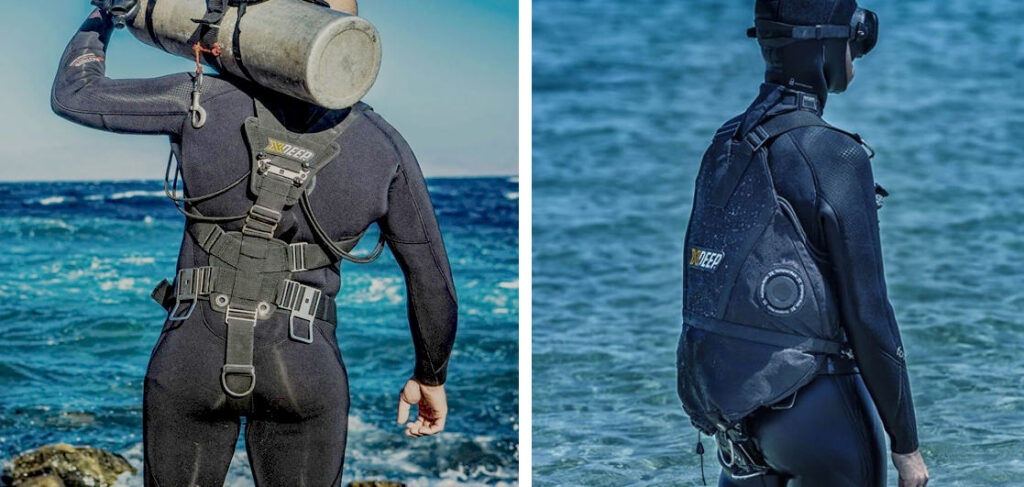
Unlike traditional scuba diving where tanks are carried on diver’s back, in sidemount diving tanks are positioned on the side of the diver’s body, clipped to a specially designed sidemount harness. This setup keeps divers balanced and streamlined in the water while offering safety and redundancy.
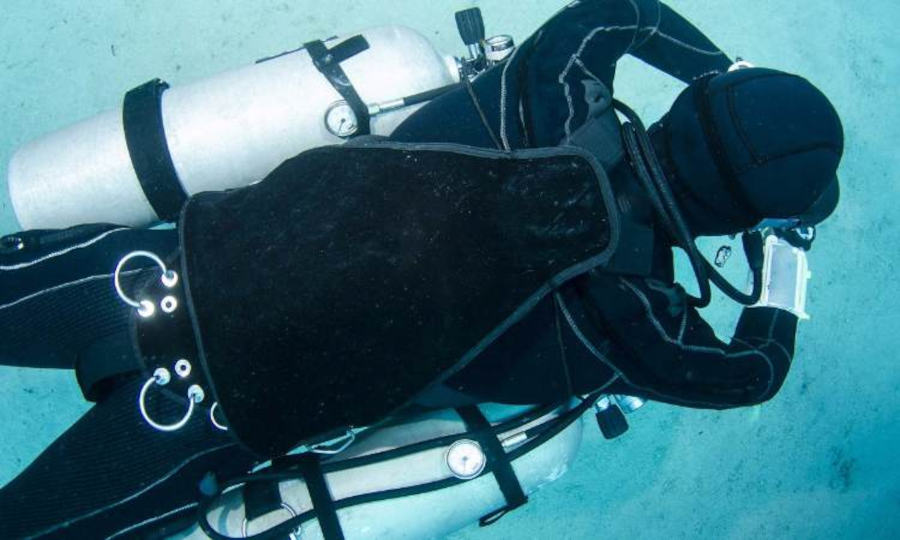
Advantages of sidemount system extend beyond comfort and redundancy, offering divers greater flexibility, efficiency, and great control in complex dive scenarios.
Key benefits of sidemount diving
1. Improved Streamlining and Trim
In sidemount diving cylinders are placed along the diver’s body, making easier to maintain proper horizontal trim position. This reduces drag and increases efficiency underwater. By setting up cylinders and adjusting sidemount harness correctly, divers achieve precise buoyancy control and trim. This level of customization is one of the reasons sidemount appeals to advanced divers.
2. Redundancy and Safety
With two independent cylinders, where each cylinder functions as a standalone system, divers have built-in redundancy in case of equipment failure. Each tank has its own 1st and 2nd stage regulator, pressure gauge and inflator hose, which adds an extra layer of security, especially in technical diving.
3. Flexibility and Comfort
Many divers find sidemount more comfortable, especially those with back or shoulder problems. Cylinders are donned in the water, eliminating the need to carry heavy tanks on land. Also, in case of emergency valves handling is much easier using sidemount in compering to using twinset backmount configuration.
4. Access to Tight Spaces
The streamlined profile makes sidemount the preferred choice for cave and wreck divers navigating through confined environments. Cylinders can even be unclipped and pushed ahead in extremely tight passages, so called squeezes.
5. Gas Management
Sidemount diving requires alternating between the two cylinders to balance gas usage. Switching between tanks balances consumption and helps divers monitor gas more effectively and more frequently. This deliberate cylinder rotation can also encourage better awareness and planning.
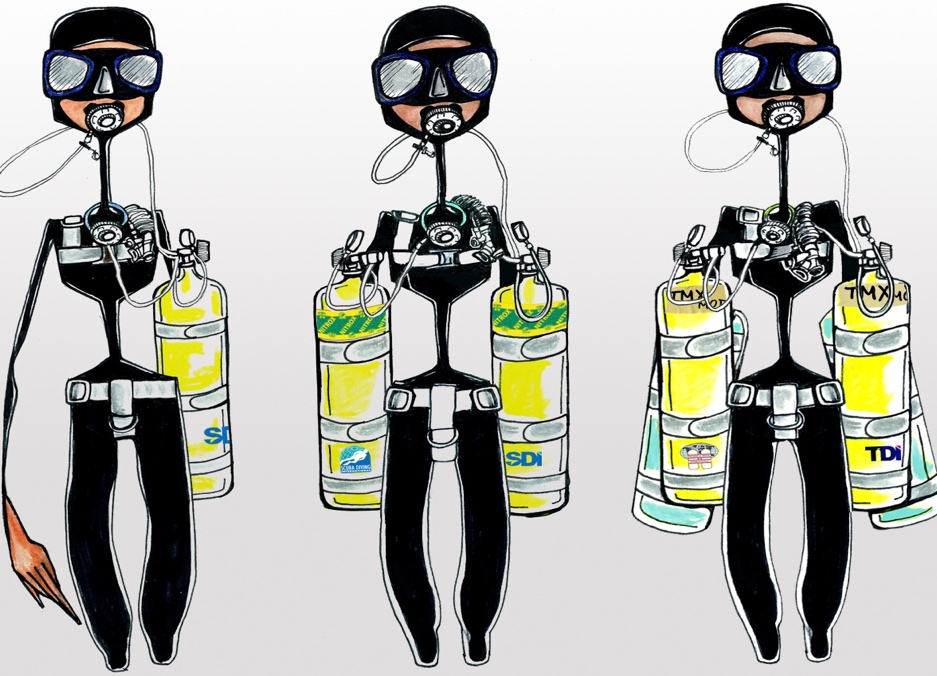
Sidemount globally
Unlike D.I.R. concept with standardised equipment configuration, in sidemount diving equipment configuration will defer slightly depending on location and the model of a sidemount system used. As the sidemount diving becomes more popular the systems are becoming more standardized, but personalised approach is still very common in sidemount diving.
For example: sidemount divers in England are primarily dry cavers, so their diving equipment is based around dry caving and climbing equipment, which makes a lot of sense in their application. With this approach they minimize equipment carried into caves.
For instance: they use climbing carabiners instead of bolt snaps and double enders; they use climbing harnesses with separate buoyancy compensator that gets additionally attached to the harness if needed, often diving even without buoyancy compensator. They use small diving tanks, usually 7L steel tanks, because they have to carry them long distances into caves therefore, they need cylinders to be light and small. They chose steel cylinders because durability of material.
As they move through the tight and long cave passages diving cylinders get bumped around quite heavily, and such damages could be fatal for aluminium tanks for example. For guide line (navigation) they usually use caving/climbing ropes instead of thin cave line normally used by cave divers in other parts of the world.
They rarely use dry suits because crawling through tight and muddy dry-cave passages is much more comfortable in a wet suit, without need for removing the suit when they exit sumps because the next sump might be just around the corner and they will have to dive in again very soon. They do not use long hose configuration for gas shearing, they use short regulator hoses with approach that every diver is responsible for himself, but even if they run into gas emergency situation, they prefer passing entire tank to the diver in emergency instead of restricting themselves with gas sharing which sometimes not so convenient in tight and long cave passages.
Sumps, or submerged cave sections, are usually very shallow, with no water flow, so they silt out very quickly, which makes diving in zero visibility for UK cave divers a standard procedure. This is the reason they don’t need to worry being perfect in terms of finning techniques and equipment streamlining.
Florida cave divers on the other hand have slightly different approach. Florida caves are fully flooded, deep and cold, so dry suits and high-volume steel cylinders are used. Their buoyancy compensators have higher lift capacity due to heavy equipment carried. They usually have good access to the cave entrances so no need for carrying equipment long distances into caves such as UK divers do. Most cave divers in Florida come from D.I.R. system so they transferred D.I.R. system into sidemount diving too, with big emphases to team diving and long hose configuration. Caves in Florida have pristine visibility and beautiful rock formations, so finning techniques, buoyancy control and streamlining are very important skills for Florida cave divers.
Similar would be for cave divers in Europe, such as France, Spain, Italy or Greece.
Cave divers in Mexico are slightly different too. Mexican caves are much warmer so no need for tick exposure suits and heavy steel tanks. In Mexico cave divers use aluminium tanks, thin wet suits or dry suits with very thin undergarment. Due to light equipment carried buoyancy compensators do not need big lift capacity. Caves in Mexico are also fully submerged, and with good access to the cave entrances so no need for carrying equipment long distances inside caves. Mexican caves usually have very little or no flow at all, with beautiful rock formations, so streamlining, buoyancy control and finning techniques are very important skills for cave divers in Mexico.
Training and Equipment
Sidemount diving requires specialized training and equipment, as it involves new skills in buoyancy, trim, gas management and equipment configuration. Today almost all agencies offer sidemount course as part of the recreational specialty programs, but many of them offer more advanced technical sidemount diving courses as well.
Sidemount system equipment includes:
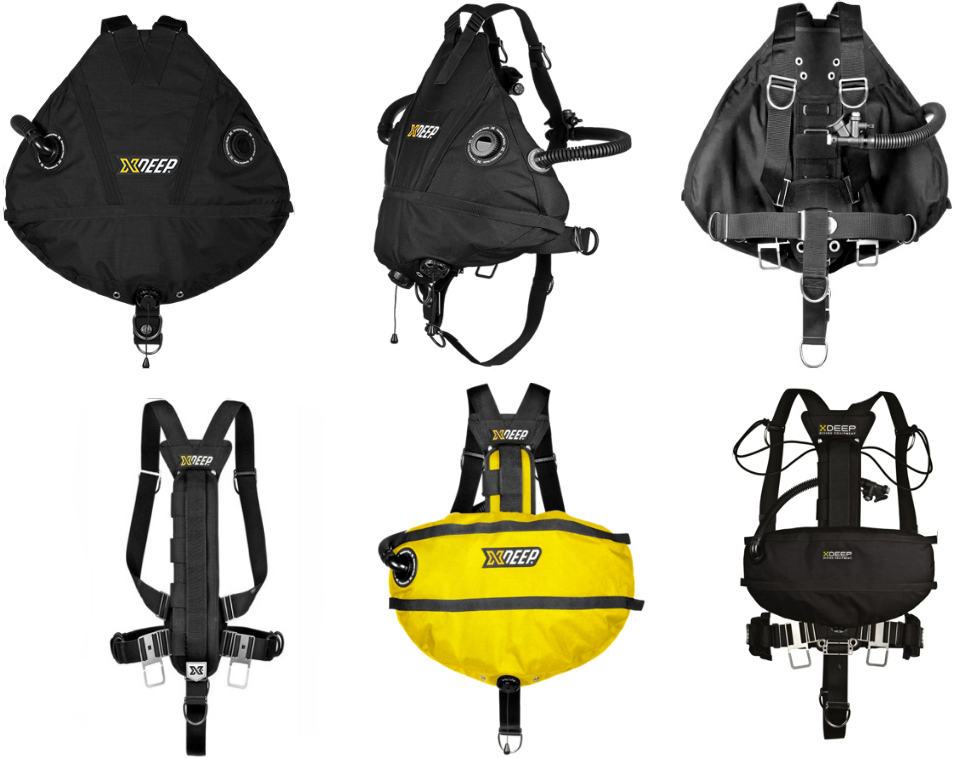
• Sidemount harness and wing:
Specially designed buoyancy compensator for sidemount use only. Designed for sidemount cylinders attachment, keeping divers streamlined and in proper horizontal trim. Most of the sidemount systems today have harness and wing together as part of a single unit, but there are still few models available on the market that have harness and wing as separate items.
• Sidemount Cylinders:
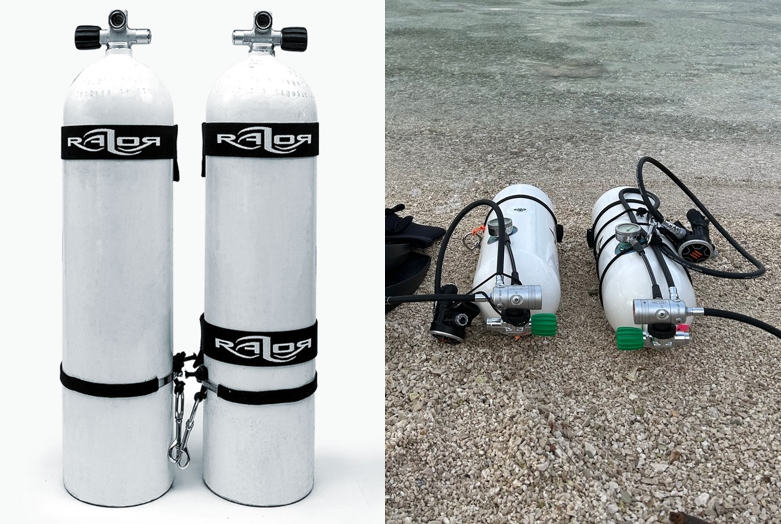
Various cylinders could be used for sidemount diving, but most common cylinders used are aluminium 11.1L (S80) or 12L long steel tanks (same tanks used for twinset back mount configuration). Aluminium tanks are usually used in warm waters, diving no suit or wet suit not ticker than 5mm. Steel tanks are used in colder environments, diving wet suits ticker than 5mm or dry suits.
Top of the tank, or tank valve, is secured with bungee attached to the harness keeping top of the tank tight under the diver’s arm pit. Bottom of the tank is attached to waist D-ring with boltsnap secured to the tank with jubilee clip. Correct positioning of the tank bottom clip is very important for overall rig balance.
• Regulator setup:
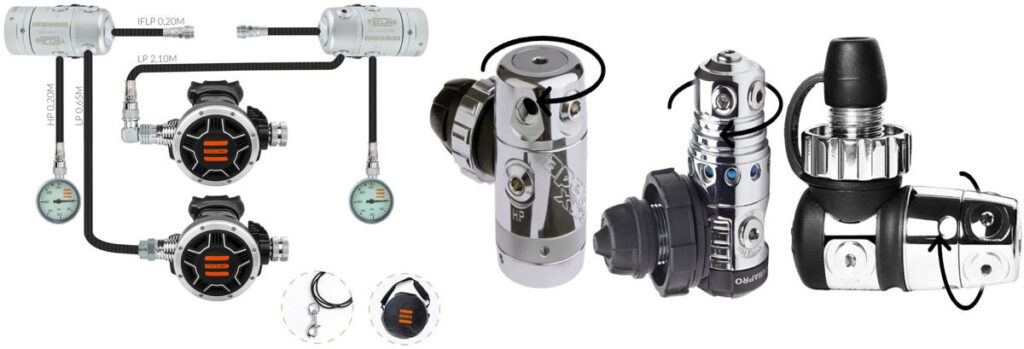
Two first stage regulators, one per tank, each with its own second stage, SPG and inflator hose, arranged for streamlined routing, usually in combination with 5th LP port and turret swivel head on first stage regulators. 5th port is used for BC inflator on the left-side and dry suit inflator on the right-side cylinder. Usually, right cylinder has second stage regulator on the long hose (1.8 – 2.1m) which is donated in gas emergency situation, and left cylinder second stage regulator is hanging on the neckless with 90-degree elbow on the regulator short hose.
Challenges and Misconceptions
• Incorrect setup: Incorrect equipment configuration, poorly adjusted sidemount harnesses, incorrect tank rigging set up, incorrect hose routing, and so on., can lead to instability and drag. This is very common mistake for many self-taught sidemount divers.
• Learning curve: Correct equipment configuration and proper fundamental skills are very important. It is very difficult to build up on poor foundations. Confidence comes with slow progress, practice and experience in the water.
But practice alone does not make perfect. Perfect practice makes perfect.
• Overconfidence: Due to redundancy divers see sidemount as safer by default, but safety does not depend on equipment alone. Safety depends on skill, discipline, and correct application.
Is Sidemount Right configuration for You?
Many recreational divers choose sidemount for its comfort, safety, redundancy, or simply because they enjoy the look and the freedom it brings.
So, if you are a recreational diver looking for any of the above, sidemount is a configuration worth exploring.
If you are a diver, recreational or technical, struggling to carry heavy tank(s) on your back, sidemount is probably way to go.
But, while sidemount offers clear advantages, it’s not necessary the best option for all types of diving. Backmount systems remain effective for many types of diving, particularly for single-tank recreational diving, deep decompression diving, boat diving, and so on.
For me, sidemount configuration is just another tool in the tool box. A tool that is going to be used for certain kind of jobs.
Such as the rebreather diving, single tank diving, or twinset backmount diving, sidemount diving also have clear advantages for certain types of diving scenarios. So, it is a matter of choosing the best configuration for planned dive.
Overall, sidemount diving is not a trend. Sidemount diving is a highly refined system that, when properly applied, enhances safety, flexibility, and efficiency, in range of diving environments. For divers progressing into technical or overhead environments, sidemount configuration offers unmatched versatility. With correct training and disciplined approach, it becomes more than a configuration. It becomes a philosophy of diving.
Article author: Andrija Lukenda