


In 1999 physiologists David Dunning and Justin Kruger identified “Dunning-Kruger effect”, where people with limited knowledge and competence greatly overestimate their capabilities and cannot recognize their incompetence.
No surprise this psychological phenomenon plays important role in SCUBA diving. Usually manifests after receiving certification card, and with biggest effect early in divers’ journey, after completion of initial Open water diver course.
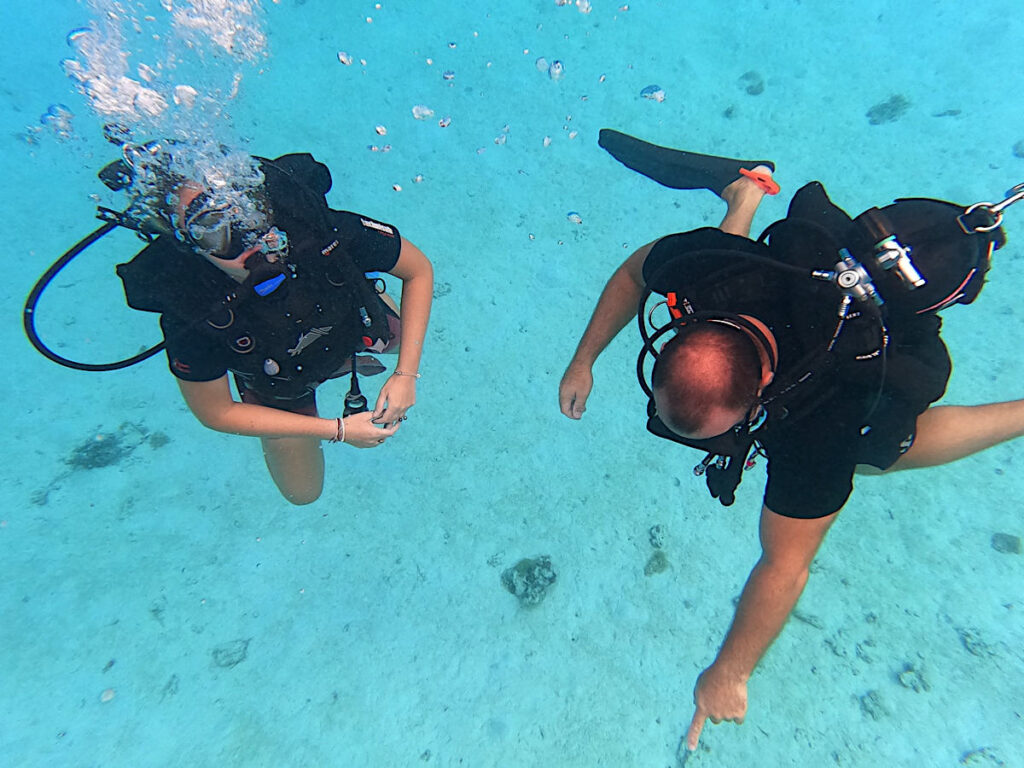
A newly certified divers may feel confident after “mastering” basic skills, while diving in controlled enviroment and under direct supervisions of an instructor. However, this confidence can exceed their actual ability to handle real-life conditions, such as strong currents, low visibility, equipment malfunctions, or emergency situations.
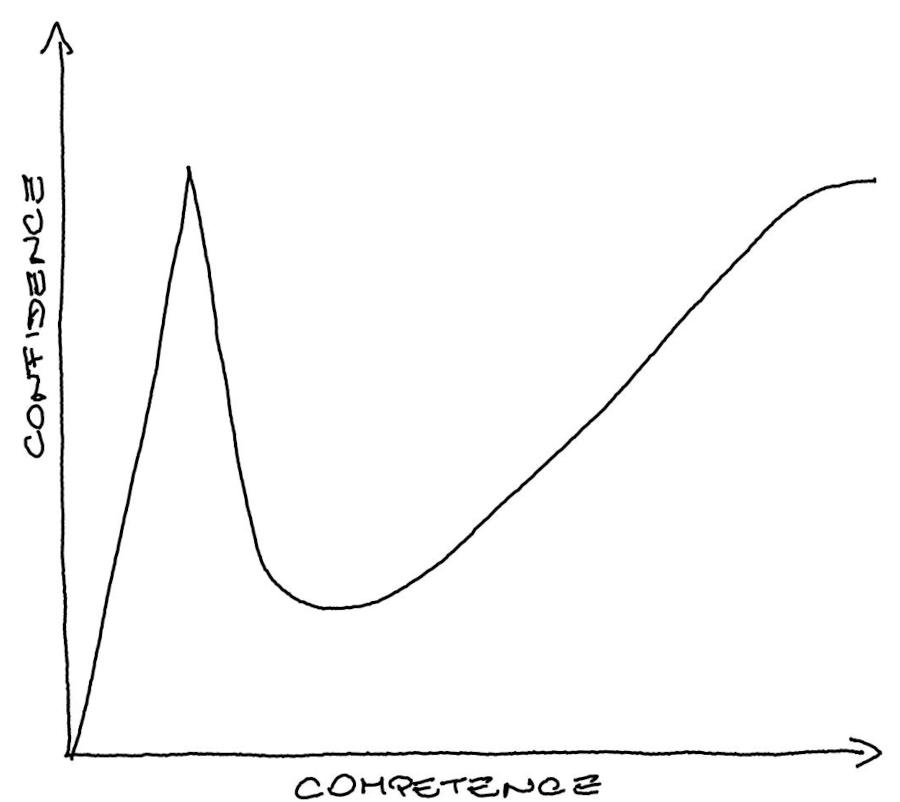
As you can see on the graph, sudden drop in confidence is what happens to many beginner divers after facing their first real life situation.
After “mastering” all mandatory basic skills and completing the initial Open Water SCUBA Diver training course, divers feel confident, most of the time think they “know pretty much all” about diving. They feel good under water, they are having fun, enjoying underwater world with their buddies. As they collect few dives “under their belts” their confidence rise more, until the point they experience real life situation, something they haven’t experienced before and were absolutely not reprepared for.
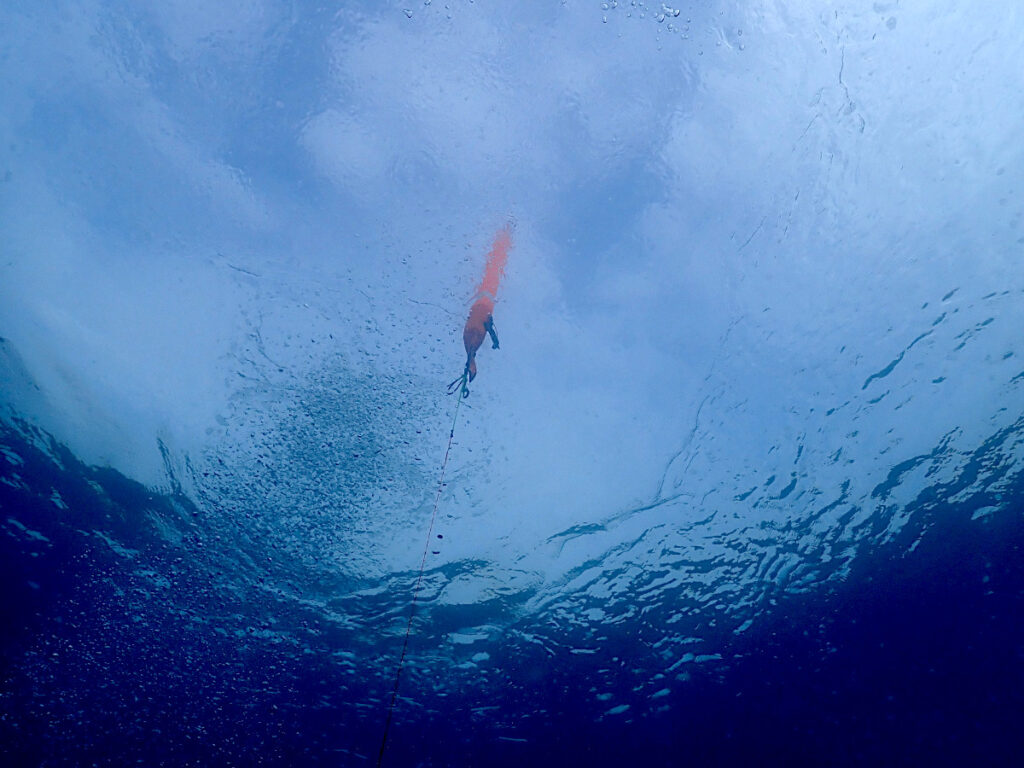
For example: two diving buddies find themselves in strong current, drifting away from their group, losing their entry point and sight of a dive boat. As they try to swim against the current, they start breathing heavily, their air consumption increase, CO2 levels start rising in their bodies due to insufficient respiration, their air consumption increases even more. After checking their SPG’s they see they are running low on air. Current is strong and they are unable to swim against it, also due to strong current visibility deteriorates, they lost their group long time ago, they don’t know where they actually are, and they are trying hard not to lose each other. Panic kicks in, and already uncontrollable situation gets out of control. Current takes them and they find themselves “shutting” to the surface without even realising it. They make extremely fast uncontrolled ascent, without deploying DSMB (which they never used anyway and didn’t even have one on them), without completing the safety stop, and so on.
They risk all sorts of complications, such as lung overexpansion, decompression sickness, and potentially being hit by the boat on the surface as they were in quite busy boat traffic area.
So, what was supposed to be quite easy and enjoyable dive turned very quickly into life threatening situation.
Confidence Curve in SCUBA Diving
- Beginner Phase – Low confidence, high caution
- Early Certification Phase – Rising confidence, limited experience (highest risk zone)
- Experience Accumulation – Confidence dips as awareness grows
- Advanced Competence – Confidence stabilizes, aligned with actual skill
The danger zone lies in phase two, and this is where the Dunning–Kruger effect is strongest. This phase makes divers being overconfident and they may, for example:
- Skip thorough pre-dive checks,
- Dive beyond certification level and recommended depth limits,
- Ignore changing environmental conditions,
- Overestimate air supply or physical endurance,
- Resist guidance from more experienced divers or instructors, and so on.
These behaviours increase the likelihood of accidents, and not because the diver is reckless, but because they genuinely believe they are more capable than they are.
“They don’t know what they don’t know.”
Rapid Initial Learning Curve
Entry-level courses give future divers a lot of information and knowledge, both theoretical and practical. Divers start from zero knowledge (in most cases), to relatively big amount of knowledge in small amount of time. This knowledge though may seem big for beginner divers, but it is still only just enough for safe basic dives, it is not a mastery by any means.
Delayed Consequences
Mistakes underwater do not always lead to immediate problems, which boosts false confidence.
Invisible Risks
There are many dangers in SCUBA diving that beginner divers are not necessarily aware of, and most of these dangers are not obvious to beginners until it’s too late.
Mitigating the Risk
- Continuous Education: Advanced courses, specialty training, and refresher sessions help align confidence with competence.
- Dive Within Limits: Respect certification boundaries and environmental conditions.
- Seek and accept Feedback: Dive with instructors or experienced buddies who can offer honest assessments.
- Practice Humbleness: Treat every dive as a learning opportunity.
- Scenario Training: Simulating emergencies builds realistic self-assessment. Practice basic open water skills over and over again until they become muscle memory.
The Role of Diving Instructors
Instructors play critical role in “shaping” new divers. Beyond teaching skills, they must help students develop accurate self-awareness and proper mind set. Encouraging questions, emphasizing limitations, and sharing real-life experiences can counteract overconfidence.
Instructors should create culture of respect, emphasizing not only safety but equally important encouraging culture where acknowledging limitations is seen as strength, not weakness. Experienced divers who promote humbleness can influence newer divers to adopt the same mindset.
Afterall, ocean does not reward overconfidence. The Dunning–Kruger effect reminds us that what we don’t know can hurt us, especially in the environments where mistakes are less forgiving. In scuba diving, true expertise is not just about skill, but about knowing the boundaries of that skill.
The most capable divers are not those who feel invincible underwater, but those who remain aware, cautious, and always willing and to learn.
Article author: Andrija Lukenda