


Technical diving pushes human capability beyond the traditional recreational limits, extending depth, duration, and environmental complexity. These additional challenges also bring higher risk level. Equipment failures become more consequential, decision-making window shrinks, and the margin for error narrows.
Because of this, team diving, a disciplined and cooperative approach to underwater operations, plays crucial role in modern technical diving philosophy.
Team diving is not simply “diving with a buddy.” It is a highly structured system that integrates training, planning, equipment configuration, communication, situational awareness, and mutual support, in order to reduce risk and improve performance in demanding environments.
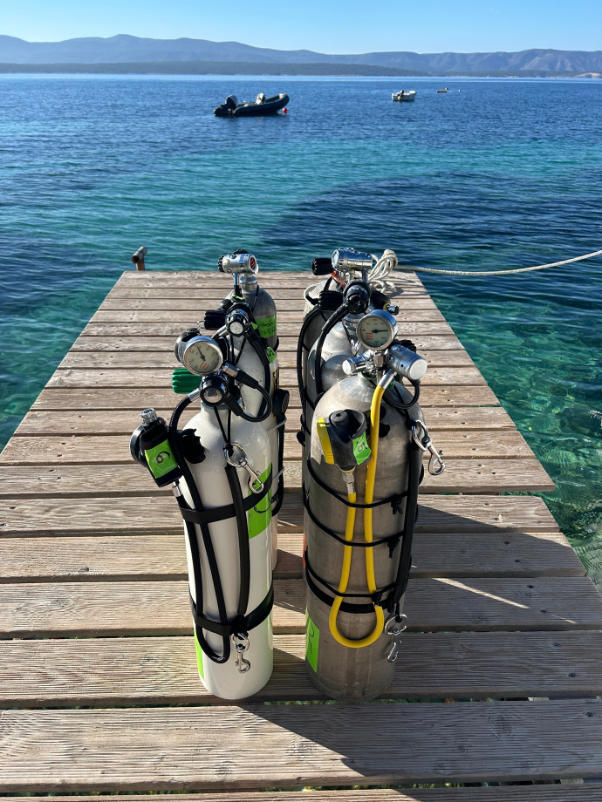
Unlike recreational buddies, technical diving teams rely on standardized equipment, procedures, and communication so that responses to problems are immediate and predictable. When a failure occurs, the solution is already practiced, agreed upon, and understood by everyone involved.
Whether executing a deep trimix descent, navigating a complex cave system, or conducting a staged decompression, the strength of the team often determines success of the dive.
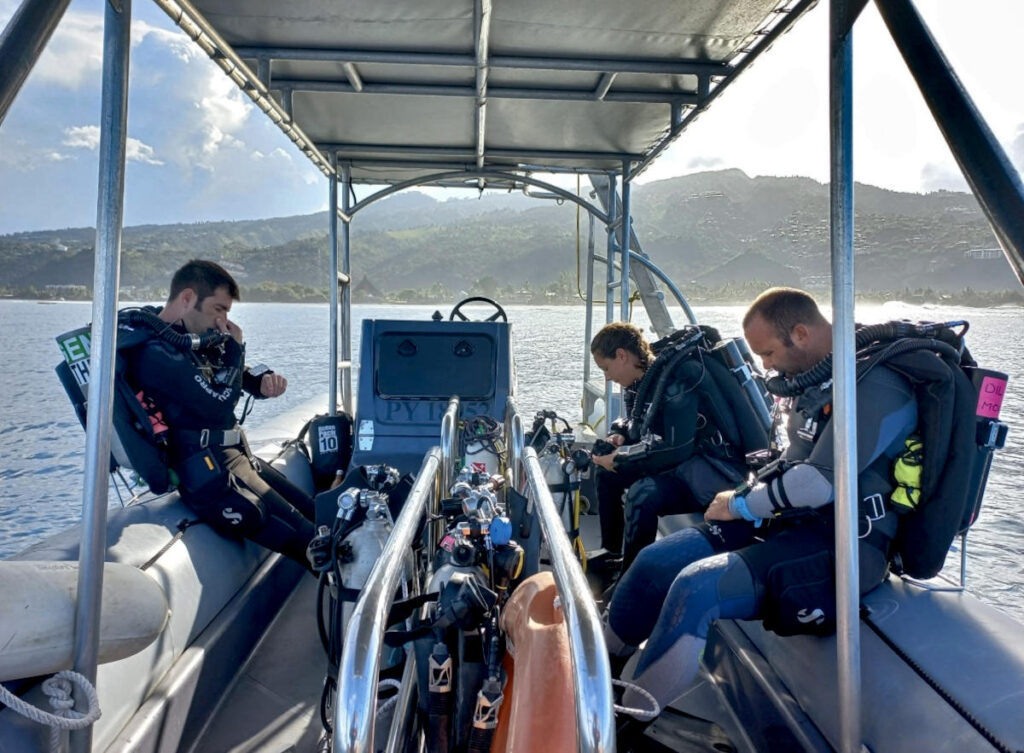
Redundancy Beyond Equipment
Technical divers already carry extensive redundant gear, but the team, however, provides redundancy of minds, collective problem solving and shared awareness.
If one diver experiences narcosis, cognitive overload, hypoxia, loss of awareness,.. the team becomes a stabilizing force.
Human factors research in diving shows that most incidents result not from a single catastrophic failure, but from a chain of small errors.
A well-trained team breaks that chain early on by:
- Cross-checking and testing equipment
- Analysing and Verifying gas mixes and gas switching procedures
- Maintaining consistent positioning for mutual visibility
- Communicating anomalies immediately
Deep and overhead-environment dives demand high task loading: navigation, buoyancy control, gas management, deco planning, line work, and much more.
A team distributes those tasks so no individual diver becomes overwhelmed and overloaded. With proper system in place a team makes sure potential mistakes are discovered and corrected early before they cause a problem.
Stress impairs decision-making.
A competent, predictable team provides reassurance that reduces psychological load, promoting clearer thinking and slower, more accurate, already trained and practiced actions when problems occur.
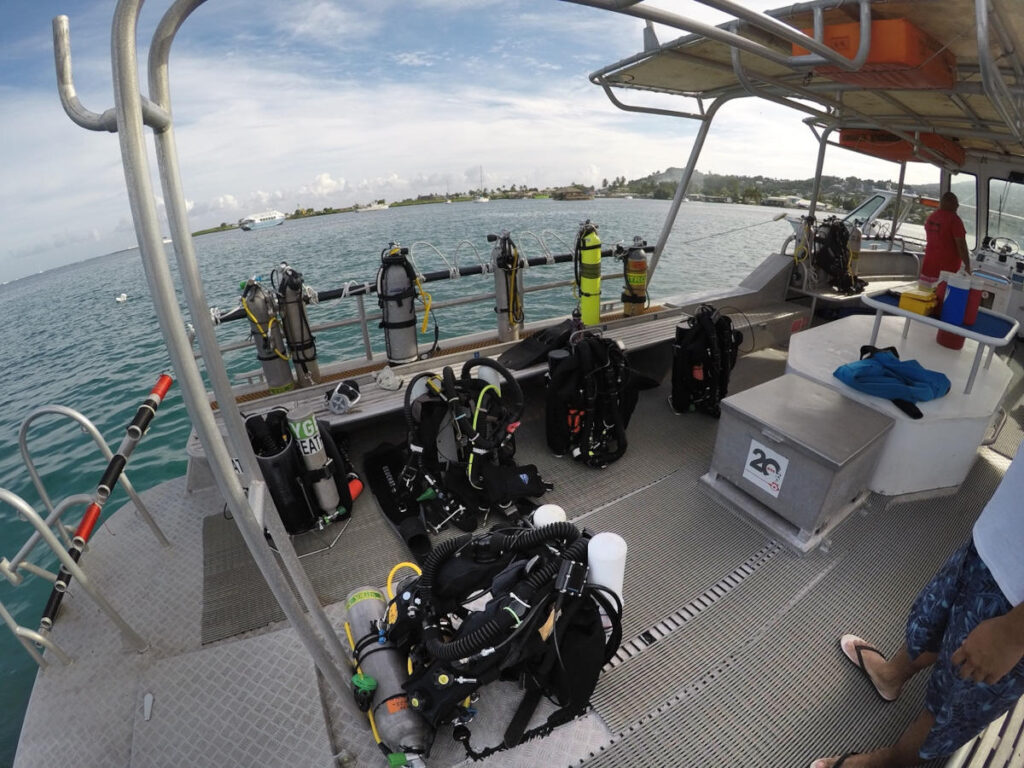
Core Principles of Effective Team Diving
1. Standardization
In high-stress situations, complexity and inequality is the enemy. Therefore, standardization plays key role in technical diving, and it is very important part of technical diving systems.
It includes:
- Equipment configuration
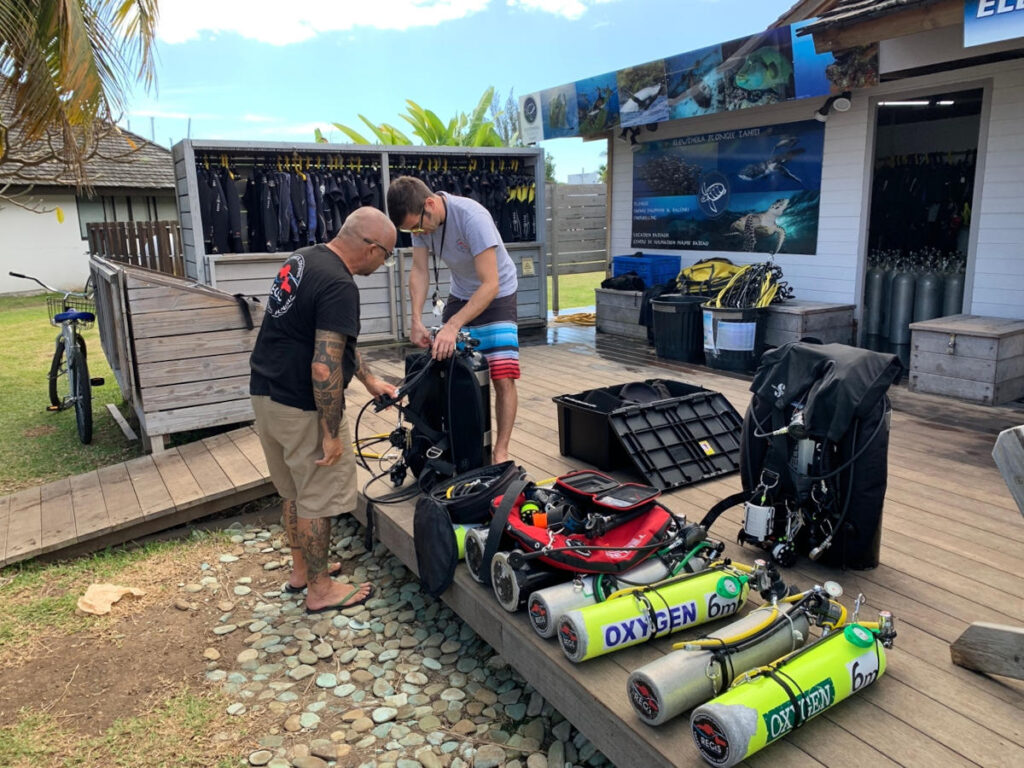
- Gas mixes, labelling, and switching procedures
- Emergency drills and failure responses
Standardization eliminates misunderstandings and speeds up response time during emergencies.
This uniformity allows any diver to assist another instinctively. When a regulator free-flows or primary light fails for example, team-mates do not waste precious time interpreting unfamiliar equipment, they just act.
It is also very important each team member has similar training, but it is even more important team trains and build skills together.
By training and repeating scenarios, the team replaces panic with muscle memory, and problems are managed calmly, efficiently, and collectively.
Also, team must continue their education and review their performance continually.
Successful team is built over time. Trust develops through shared training, honest debriefs, and consistent performance. Technical diving teams that dive together regularly develop a rhythm that allows them to anticipate each other’s actions, often without explicit communication.
2. Situational Awareness
High-level of situation awareness means each diver maintains a real-time understanding of:
- Team location and position
- Gas levels and decompression obligations
- Environmental (visibility, flow, depth changes)
- Runtime
Team diving creates shared situational awareness, which is more robust than individual situational awareness.
3. Communication
Communication begins on the surface and continues seamlessly underwater.
Technical divers use:
- Hand signals
- Light signals (critical in caves, wrecks and night environments)
- Touch contact (in zero visibility)
Good communication is clear, conservative, and redundant.
4. Positioning
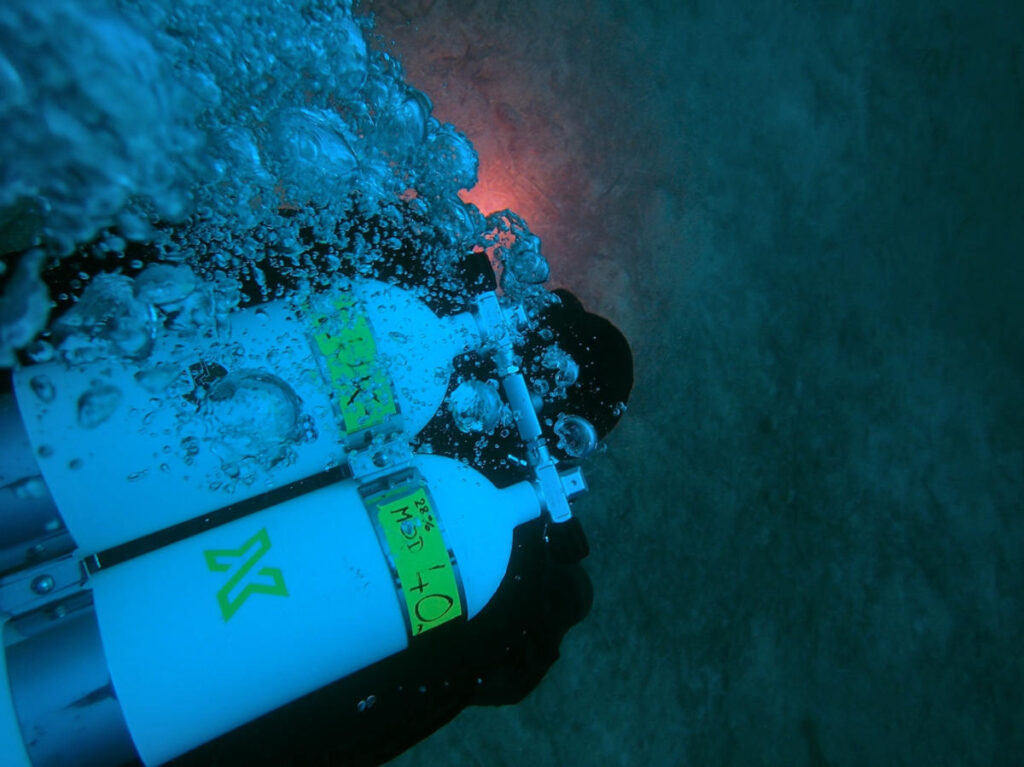
Good underwater positioning is essential. Divers must be close enough to respond effectively if other diver needs help, but also keep good distance to avoid entanglement and confusion.
The ideal formation varies depending on the environment. In open water, and when the environment allows, the ideal divers position is side by side, making sure communication and eye contact can be established by slight head turn to the left or to the right. In tight spaces such as those found in caves or wrecks, divers will have to be one behind the other, but in any case, effective underwater positioning ensures possibility of a quick and instinctive reaction in case of emergency.
5. Gas Management
In gas planning technical diving teams usually use rules-of-thirds. Which means that one third will be used for in-coming part of the dive, second third for exiting the dive, and last third will remain for emergency situations and gas sharing, hopefully never used.
Gas planning must not only support self-rescue but team rescue too, ensuring that a diver who loses all usable gas can ascend safely on a teammate’s supply.
Roles and Responsibility
Although all technical divers are trained to be independent problem-solvers, team roles are often assigned before the dive. One diver may lead navigation, another track time and depth, while a third focuses on situational awareness. These roles can rotate, but clarity is essential.
Common roles include:
- Team Leader / Navigator
- Manages direction of travel
- Sets pace and depth
- Oversees adherence to the plan
- Team Member(s) / Support Divers
- Maintain visual contact
- Monitor environmental conditions
- Assist with equipment handling and deco
- Safety or Support Divers (in complex dives, expeditions, or extreme technical diving)
- Carry additional gas, stage and deco cylinders
- Manage decompression stations
- Provide emergency support
Equally important is the understanding that any diver can call the dive at any time. In effective team diving, ego has no place. Turning a dive early is not a failure, it is a demonstration of discipline and sound judgment.
The Future of Team Diving
As technical diving expands, with advances in rebreathers, mixed-gas logistics, and expedition-level projects, team diving will remain central.
Modern training agencies increasingly emphasize human factors, recognizing that technology cannot replace disciplined teamwork. Whether in a cave at 30 meters or on a wreck at 120 meters breathing trimix, the team is a diver’s most valuable piece of equipment.
Team diving transforms complex and hazardous underwater operations into structured, predictable, and manageable endeavours. It improves safety, distributes workload, and creates a communication framework that supports both routine and emergency activities.
In technical diving, where every dive involves elevated risks, distance, depth and decompression obligation magnify the consequences of small errors, the team is not optional, it is essential.
Team diving mitigates these risks by replacing individual vulnerability with collective strength. It is not just a technique; it is a mindset.
For technical divers who take their training seriously, the question is not whether to dive as a team, but how well that team functions when most needed.
Article author: Andrija Lukenda